Men's Health Trends 2026: Why the Prostate Supplement Boom Outpaced the Evidence — and What Buyers Should Check First
Published October 10, 2026 · By Marcus Reid
At a Glance
The U.S. urology supplement market crossed $843 million in 2025 and is on track for $893 million in 2026, with prostate-support formulas absorbing the bulk of that growth as men over 50 — the demographic most affected by benign prostatic changes — increasingly search for nutritional alternatives before turning to pharmaceuticals. We independently reviewed three prostate-support supplements this year (ProstaFense, ProstaPeak, Prostadine), and all three share the same structural limitation: every active ingredient sits inside a proprietary blend with no individual doses disclosed, making it impossible to verify whether any component reaches its clinically studied threshold.
1. The Demographic Engine Behind Prostate Supplement Demand
The prostate supplement category is not riding a wellness fad. It is riding a demographic reality that is not going away. Benign prostatic changes affect roughly 50% of men between ages 51 and 60, climbing to over 80% by age 70. The combined lifetime prevalence of clinically significant BPH is approximately 26% across all adult men — meaning roughly one in four men will experience moderate-to-severe lower urinary tract symptoms at some point.
What this means for the supplement market in 2026 is straightforward: the oldest baby boomers turned 80 this year, the youngest are now 62, and the entirety of Generation X is between 46 and 61 — squarely within the age window where prostatic changes become noticeable. These are the consumers now searching for "prostate supplement," "saw palmetto for prostate," and "natural BPH support," and they represent a buyer pool that will only grow larger over the next two decades.
The U.S. urology supplement market reflected this in its growth trajectory: from $706.5 million in 2022 to $797.6 million in 2024, with a projected $893 million in 2026. The global prostate health supplement market was valued at $3 billion in 2025, with projections reaching $5 billion by 2035. These are not speculative numbers driven by social media trends — they track an aging population dealing with a near-universal physiological change.
2. The Saw Palmetto Question: From Hero Ingredient to Contested Evidence
Saw palmetto (Serenoa repens) has been the default anchor ingredient in prostate supplements for over two decades, and it appears in all three of the formulas we reviewed this year. Its reputation was built on an early systematic review of 18 randomized controlled trials involving 2,939 men, which found decreased urinary tract symptom scores and reduced nocturia compared with placebo.
But the evidence landscape has shifted substantially since that 1998 meta-analysis. The most recent 2023 Cochrane review update — incorporating newer, more rigorous trials — concluded that Serenoa repens is not superior to placebo for improving International Prostate Symptom Score (IPSS), even at double and triple doses. A dose-escalation trial that tripled the standard 320 mg/day dose found no significant difference from placebo in AUA symptom scores.
This doesn't mean saw palmetto is inert — earlier meta-analyses did find benefits, particularly for nocturia, and a 2025 systematic review of recent clinical evidence suggests benefits may depend on extract standardization, lipophilic fraction content, and population selection. But the confident "clinically proven" language that still dominates prostate supplement marketing in 2026 no longer reflects the current state of the evidence, and consumers deserve to know that the conversation among researchers has become considerably more nuanced than the sales pages suggest.
3. What Actually Has Stronger Evidence — and at What Dose
While saw palmetto's evidence has weakened under scrutiny, several other ingredients in the prostate-support category retain more robust clinical backing — when dosed adequately:
- Beta-sitosterol: A Cochrane systematic review of 4 RCTs involving 519 men found significant improvement in urinary symptom scores and peak urinary flow. The key trial used 20 mg three times daily (60 mg/day); a second trial used 130 mg/day. The effective range is 60–130 mg/day of free beta-sitosterol — a narrow but well-documented dose window.
- Pygeum bark (Pygeum africanum): The Cochrane review of 18 trials involving 1,562 men found moderate symptomatic improvement and a 23% increase in peak urinary flow rate. The studied dose range was 100–200 mg/day of standardized extract.
- Zinc: Prostate tissue concentrates zinc at levels far higher than other soft tissues, and zinc levels are depleted in BPH tissue. The Recommended Dietary Allowance is 11 mg/day for adult men; supplementation above that is common in prostate formulas but evidence for therapeutic benefit in BPH remains indirect.
- Selenium: Observational data links adequate selenium status to prostate health, but the large-scale SELECT trial (2008) found no reduction in prostate cancer risk from selenium supplementation — undermining the primary marketing claim the ingredient was sold on.
The pattern is consistent: ingredients with genuine clinical data require specific, verifiable doses to produce the effects observed in trials. A proprietary blend that lists these ingredients without disclosing individual amounts tells a buyer nothing about whether the formula can replicate the research it implicitly references.
4. The Proprietary Blend Problem: What We Found Across Three Reviews
Our prostate-support cluster now includes three independently reviewed formulas, and all three illustrate the same transparency gap from different angles.
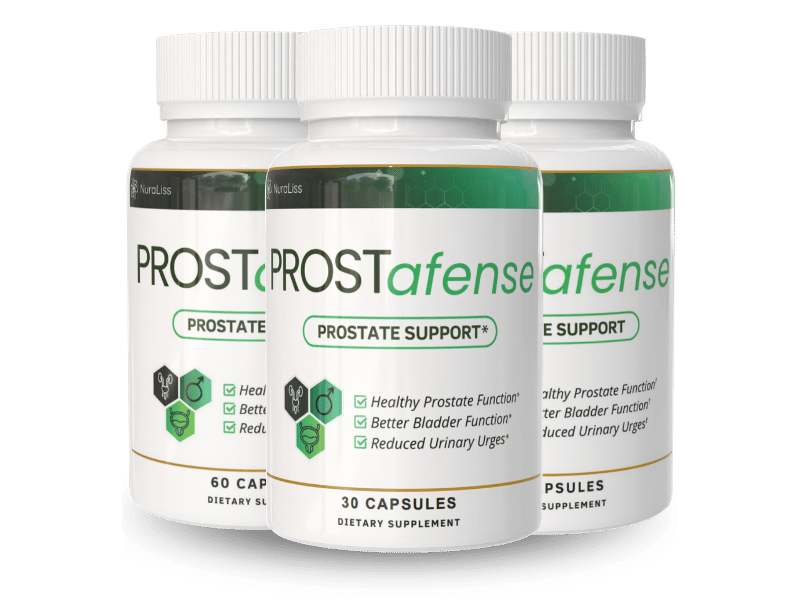
ProstaFense uses a 400 mg "Prostate Support Blend" containing saw palmetto, pygeum, beta-sitosterol, stinging nettle, pumpkin seed, and cat's claw — six botanicals sharing 400 mg total. Even if the blend were split equally (an unlikely distribution), each ingredient would receive roughly 67 mg — below the 100–200 mg studied dose for pygeum and the 320 mg standard for saw palmetto. Only the micronutrients are individually disclosed: selenium at 70 mcg, zinc at just 5 mg, vitamin E at 6.5 mg, and vitamin B6 at 1.67 mg.
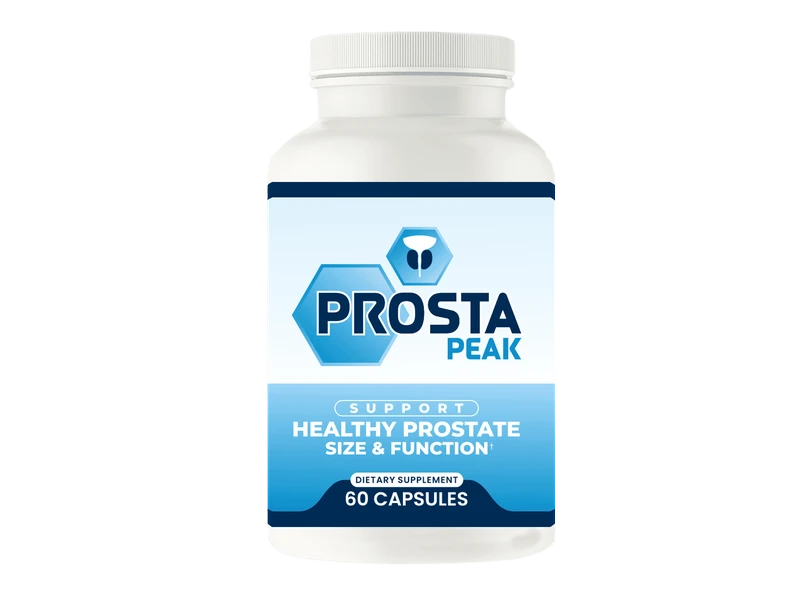
ProstaPeak takes the opposite approach — maximizing ingredient count with 18 named compounds spanning prostate botanicals, anti-inflammatories, antioxidants, and micronutrients. Saw palmetto, pygeum, beta-sitosterol, nettle root, pumpkin seed, lycopene, curcumin, quercetin, boswellia, green tea, cat's claw, raspberry extract, soursop, zinc, selenium, vitamin D3, vitamin K2, and boron. The breadth is impressive on paper — but every single ingredient sits in a proprietary blend with no individual dose disclosed. With 18 ingredients sharing an undisclosed total weight, the mathematical odds of any single compound reaching its studied threshold are low.
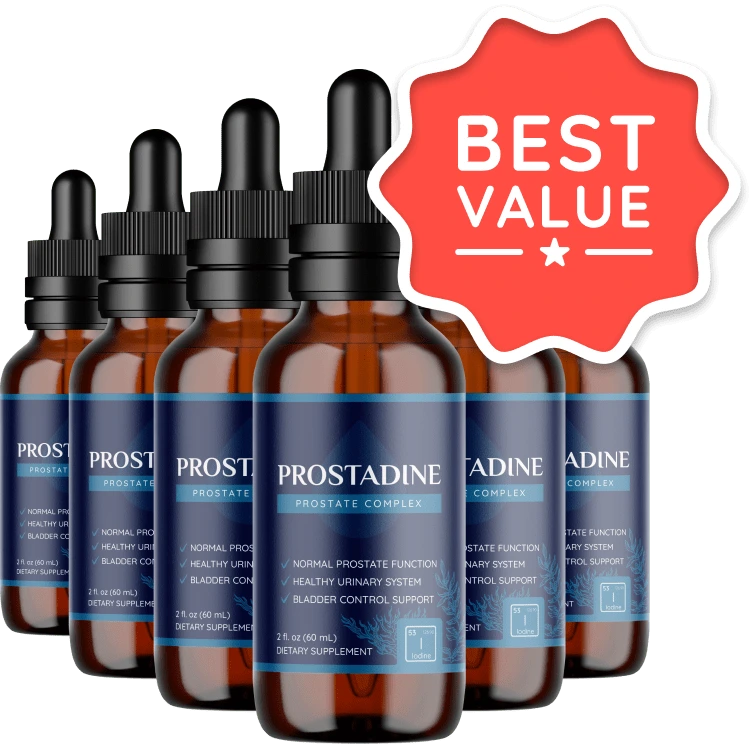
Prostadine takes a third approach: a liquid dropper formulation built around marine botanicals (nori yaki, wakame, kelp, bladderwrack) alongside saw palmetto, pomegranate, shilajit, and neem. The 2 mL daily serving is the only dose disclosed; no individual ingredient amounts are specified. The marine-botanical angle is distinctive but introduces a different transparency problem: the clinical evidence base for seaweed extracts in prostate health is substantially thinner than for saw palmetto or beta-sitosterol, and without disclosed doses, there is no way to compare what the formula delivers to what limited research exists.
This is not a coincidence. A 2023 paper in Nutrients examined the structural incentives behind proprietary blends in dietary supplements: under the Dietary Supplement Health and Education Act of 1994, manufacturers must list ingredients and total blend weight but are not required to disclose individual amounts within the blend. The paper found that this framework creates a systematic information asymmetry where consumers cannot perform the basic dose-verification step that would distinguish a clinically relevant formula from a label-dressing exercise.
5. The Multi-Ingredient Trend: More Compounds, Same Transparency Gap
One visible shift in the 2026 prostate supplement market is the move from single-ingredient products (typically standalone saw palmetto capsules) to multi-pathway formulas that combine botanicals targeting DHT metabolism, anti-inflammatory pathways, antioxidant defense, and urinary smooth-muscle function simultaneously.
The logic has surface appeal: prostate comfort involves multiple physiological systems, so addressing several pathways should theoretically outperform targeting just one. And several of the pathways these formulas target do have independent evidence. The inflammatory hypothesis — that chronic prostatic inflammation contributes to symptom progression — is supported by epidemiological and mechanistic evidence. Anti-inflammatory compounds like curcumin, boswellia, and quercetin (all present in ProstaPeak) have established anti-inflammatory activity in other contexts.
But multi-ingredient formulas face a mathematical constraint that single-ingredient products do not: the more compounds sharing a fixed total weight, the less room each one has to reach a meaningful dose. This is the fundamental tension the category has not resolved. Adding more pathways is a formulation philosophy; disclosing the doses that make those pathways work is a transparency commitment. In 2026, the prostate supplement market is enthusiastically embracing the first without adopting the second.
For a detailed breakdown of how each prostate-support pathway works at the molecular level, see our Prostate Support Explained guide.
6. What This Means for Buyers Entering the Category in 2026
If you are a man over 40 noticing changes in urinary patterns and searching for a prostate supplement for the first time, three checks will separate the signal from the noise:
- Changes in urinary patterns warrant a physician visit, not just a supplement. Frequent urination, nighttime urgency, and weakened stream are common with age, but they can also indicate conditions that require medical evaluation. A dietary supplement supports normal function — it does not diagnose, treat, or replace professional medical care.
- Check whether individual ingredient doses are disclosed. A supplement that lists saw palmetto, pygeum, and beta-sitosterol but hides all three inside a proprietary blend gives you no way to verify whether the formula matches the clinical research. The studied doses are specific: beta-sitosterol at 60–130 mg/day, pygeum at 100–200 mg/day, saw palmetto at 320 mg/day. If the label does not show those numbers, the buyer is trusting the marketing rather than verifying the math.
- Be skeptical of "clinically proven" saw palmetto claims. The 2023 Cochrane update changed the evidence picture. Saw palmetto may still have a role — particularly for nocturia — but the broad "clinically proven for prostate health" language that dominates the category is no longer supported by the most current systematic reviews. A formula built entirely on saw palmetto's reputation is building on shakier ground than it was five years ago.
For independent, dose-verified reviews of specific prostate-support formulas, visit our Prostate Support Formulas cluster and the individual analyses linked below.

Marcus covers Men's Health supplements for NutrasInsights, checking label doses against the published research before any product earns a recommendation.