NerveAlive Review: What the Label Says vs. What the Marketing Promises (2026)
 By Julian Bellamy · Updated September 13, 2026
Key Takeaways
NerveAlive rides the viral 'red pepper seed hack' trend, promising capsaicin-driven nerve relief through TRPV1 receptor desensitization. Yet when you flip the bottle over, capsaicin is nowhere on the supplement facts label. Inside you will find five herbal extracts — passionflower, marshmallow root, corydalis, prickly pear, and California poppy — each with its milligram dose clearly disclosed. The botanicals are legitimate calming herbs, but they have nothing to do with the capsaicin mechanism the brand's entire story is built upon.
- Capitalizes on the 'red pepper seed hack' trend — NerveAlive's entire marketing narrative revolves around capsaicin and TRPV1 receptor desensitization for neuropathic discomfort, positioning itself as a natural capsaicin-based solution.
- Five disclosed botanical doses with zero proprietary blends: every herb on the label is printed with its exact milligram quantity, offering genuine label transparency for the ingredients that are actually in the capsule.
- Capsaicin is not on the label: despite the brand's central marketing claim, the supplement facts panel lists no capsaicin, no red pepper extract, and no cayenne — the entire TRPV1 angle has no corresponding ingredient in the formula.
- Standard 60-day money-back guarantee: buyers can evaluate the formula risk-free for two months, with pricing from $49 to $69 per bottle depending on bundle size.
The viral 'red pepper seed hack' exploded across social media in 2024 and 2025, built on a simple premise: capsaicin from hot peppers can overstimulate TRPV1 pain receptors until they become desensitized, potentially reducing neuropathic discomfort at its source. It is a scientifically plausible mechanism — clinical evidence supports topical capsaicin for neuropathic pain — and brands quickly moved to package that story into supplement form. NerveAlive is one such product, positioning itself squarely as the supplement that delivers this capsaicin-based approach. Its sales page describes how capsaicin 'overstimulates the pain receptors (called TRPV1 receptors), eventually rendering them less sensitive.' There is just one problem: capsaicin does not appear anywhere on NerveAlive's supplement facts label.
What Is NerveAlive, Mechanically?
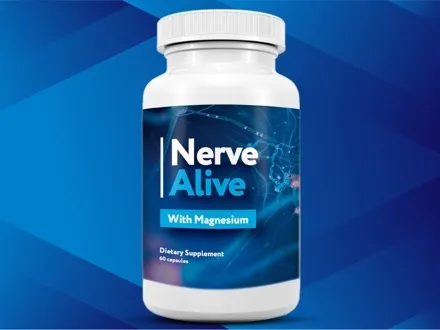
Mechanically, NerveAlive is an encapsulated botanical dietary supplement designed for daily use. A full daily serving consists of two vegetarian capsules delivering 450 mg of active botanicals across five ingredients: 145 mg Passion Flower Herb Powder (Passiflora incarnata), 110 mg Marshmallow Root (Althaea officinalis), 100 mg Corydalis Powder (Corydalis yanhusuo), 50 mg Prickly Pear (Opuntia phaeacantha) 20:1 extract, and 45 mg California Poppy Seed (Eschscholzia californica). Each bottle contains 60 capsules, representing an exact 30-day supply. Other ingredients listed are magnesium stearate and hypromellose (veggie capsule). The product is assembled in the USA and distributed by Loja Experience Ltda out of Lakeland, Florida. For a quick visual summary and product specifications, read our NerveAlive Overview.
Who NerveAlive Is For
NerveAlive is marketed toward adults experiencing peripheral nerve discomfort — tingling, numbness, or burning sensations in the hands and feet — who are drawn to the capsaicin and TRPV1 narrative popularized online. The formula's actual botanical composition, however, is oriented around traditional calming and soothing herbs rather than any capsaicin mechanism.
Consumers seeking a topical or oral capsaicin product should understand that NerveAlive does not contain capsaicin in any form. If you suffer from diagnosed peripheral neuropathy or diabetic nerve damage, this dietary supplement is not a medical treatment; your primary point of care should always be a physician.
NerveAlive
Five botanical extracts with full dose disclosure — marketed around capsaicin despite containing none. 60 capsules per bottle (30-day supply).
$69 per bottle for a 30-day supply, $59 per bottle for 3 bottles (90-day supply, includes 2 free bonuses and free shipping), $49 per bottle for 6 bottles (180-day supply, includes 2 free bonuses and free shipping). Prices confirmed from the official page in September 2026.
60-day money-back guarantee on all orders, with no hidden autoship or recurring monthly charges.
This offer is temporarily unavailable — showing our current alternative pick.Living With It
Taking NerveAlive follows a simple routine: two capsules daily with an 8 oz glass of water, as directed on the label. Because the formula contains passionflower and California poppy — both mild calmative herbs — some users may prefer taking it in the late afternoon or evening. The manufacturer recommends consistent use for several weeks to allow the botanical compounds to accumulate. If you take medications affecting the central nervous system, blood pressure, or blood sugar, consult your doctor first, as passionflower and prickly pear may interact with these pathways.
What Works in Its Favor
- Complete label transparency with no proprietary blends. Every ingredient dose is printed directly on the supplement facts panel, letting buyers verify exactly what they are taking — a meaningful advantage over competitors who hide amounts inside opaque blends.
- Corydalis offers recognized traditional comfort mechanisms. Corydalis yanhusuo contains dehydrocorybulbine (DHCB), a compound researched for modulating inflammatory and neuropathic discomfort through dopamine receptor pathways.
- Synergistic calming botanicals for relaxation and rest. The pairing of passionflower and California poppy is documented in herbal literature for easing nervous agitation and promoting calm.
- Concentrated 20:1 prickly pear extract for antioxidant support. This concentrated extract provides betalains and indicaxanthin, studied for cellular antioxidant defense against localized oxidative stress.
- Competitive pricing on multi-bottle bundles. The 6-bottle package at $49 per bottle with free shipping represents solid value for a fully disclosed herbal formula in this category.
- Straightforward two-capsule daily routine. Easy to take with meals without complicated scheduling or messy powders, backed by a 60-day money-back guarantee.
Key Specs
- Serving size
- 2 capsules daily
- Servings per bottle
- 60 capsules (30-day supply)
- Disclosed botanical dose
- 450 mg active botanicals across 5 disclosed extracts
- Key ingredients
- Passionflower 145 mg, Marshmallow Root 110 mg, Corydalis 100 mg, Prickly Pear 20:1 50 mg, California Poppy 45 mg
- Manufacturing
- Assembled in USA; distributed by Loja Experience Ltda, Lakeland FL
- Guarantee
- 60-day money-back guarantee, non-subscription purchase
Performance
Evaluating NerveAlive requires two separate analyses: the marketing claim and the actual formula. The brand's central narrative is capsaicin-based TRPV1 receptor desensitization — a mechanism with genuine clinical backing. A Cochrane-level review of topical capsaicin confirms that high-concentration capsaicin patches (8%) can reduce neuropathic pain, and lower-concentration topical formulations (0.075%) have also shown benefit. However, this entire body of evidence is irrelevant to NerveAlive because the product contains no capsaicin.
What the formula actually delivers are five traditional herbal extracts. Research on Corydalis yanhusuo identified dehydrocorybulbine (DHCB) as an active alkaloid capable of reducing inflammatory and neuropathic discomfort through dopamine receptor modulation, though clinical studies often use concentrated standardized extracts rather than raw powder. Passionflower clinical trials for generalized anxiety have demonstrated calming and nervous relaxation at doses around 250 to 500 mg daily; NerveAlive's 145 mg serves as a mild, complementary dose. Fixed-combination trials of California poppy and passionflower show efficacy in calming nervous agitation. Studies on prickly pear betalains highlight antioxidant protection. Marshmallow root (Althaea officinalis) is a traditional mucilage-rich herb used for soothing tissue comfort, though published nerve-specific clinical trials are sparse. In sum, the actual formula provides a modest, broad-spectrum herbal blend for daily relaxation and comfort support — mechanisms that bear no resemblance to the capsaicin story sold on the marketing page.
What the Sales Page Gets Right — and What It Doesn't
The botanical ingredients themselves are legitimate and well-established in herbal wellness traditions. Corydalis is a centuries-old analgesic herb, passionflower and California poppy are recognized calmative agents, and prickly pear provides verifiable antioxidant support. The label fully discloses every ingredient dose without hiding behind a proprietary blend, which is genuinely commendable in a category rife with opacity. The 60-day refund policy is clearly stated, and the absence of recurring subscription traps is a consumer-friendly safeguard. The product also happens to share an identical formula — same five ingredients at the same five doses — with Nervory, another nerve support supplement distributed by the same company, suggesting a consistent manufacturing baseline.
The most significant issue is the disconnect between the marketing narrative and the actual product. NerveAlive's sales page is built around the 'red pepper seed hack' — capsaicin overstimulating TRPV1 receptors until they desensitize. This mechanism is scientifically grounded in published research on topical capsaicin preparations. Yet capsaicin, red pepper extract, and cayenne appear nowhere on the supplement facts label. Buyers attracted by the capsaicin promise are getting a formula that has nothing to do with that mechanism. Additionally, the sales page does not display the supplement facts panel at all — ingredient identities and doses were only obtainable from a third-party press release image, not from the brand's own checkout flow. Customer testimonials and satisfaction metrics on the sales page represent internal marketing claims rather than independently verified outcomes.
Verdict
NerveAlive lands a recommendation for buyers who understand exactly what they are getting: a gentle, fully transparent botanical formula for daily nerve comfort and relaxation — not a capsaicin-based product. Its five herbal extracts are traditional, recognizable, and fully dose-disclosed, and its pricing on multi-bottle bundles is competitive within the category. If you are specifically looking for a calm-and-soothe herbal blend with full label transparency and you set aside the capsaicin marketing entirely, the formula delivers reasonable value at $49–$69 per bottle with a 60-day money-back guarantee. We recommend starting with the 3-bottle bundle to allow 90 days of consistent use within the safety of the refund window. Just know that the 'red pepper seed hack' story that likely brought you here has no representation in the capsule you will actually swallow.
This review reflects our independent editorial analysis of the manufacturer's published label and the peer-reviewed literature — see our Editorial Policy and How We Evaluate. You can also view our NerveAlive Overview for a fast product snapshot. NutrasInsights may earn a commission from qualifying purchases; see our Affiliate Disclosure.
Frequently Asked Questions
Does NerveAlive actually contain capsaicin or red pepper extract?
No. Despite the brand's marketing centered on a 'red pepper seed hack' and capsaicin-driven TRPV1 desensitization, the supplement facts label lists no capsaicin, cayenne, or red pepper extract in any form. The five active ingredients are passionflower, marshmallow root, corydalis, prickly pear, and California poppy seed.
How is NerveAlive different from Nervory?
Both products share the exact same five ingredients at the exact same dosages (passionflower 145 mg, marshmallow root 110 mg, corydalis 100 mg, prickly pear 20:1 50 mg, and California poppy 45 mg) and are distributed by the same company. NerveAlive is generally priced lower ($49–$69 per bottle vs. Nervory's $49–$79). The primary difference is the marketing angle: NerveAlive leans on the capsaicin/red pepper seed narrative, while Nervory presents itself straightforwardly as a botanical nerve comfort formula.
Is NerveAlive suitable for diagnosed peripheral neuropathy?
No. NerveAlive is a dietary supplement formulated to support normal, healthy nervous system function and comfort in healthy adults. It is not intended or approved to treat, cure, or mitigate diagnosed neuropathies, which require dedicated medical management under physician supervision.
How long should I take NerveAlive before expecting results?
Botanical formulas work through cumulative daily nourishment. Calming herbs like passionflower and California poppy can promote relaxation within days, but sensory nerve and circulatory support typically requires 4 to 8 weeks of steady daily adherence alongside healthy hydration, rest, and mobility. The 60-day guarantee provides a full evaluation window.
Ready to try NerveAlive?
See current pricing, bundle deals, and availability on the official page.
Julian is a staff editor at NutrasInsights focused on Joint & Mobility. He researches ingredient evidence and compares label doses against the studies vendors cite before any product earns a recommendation.