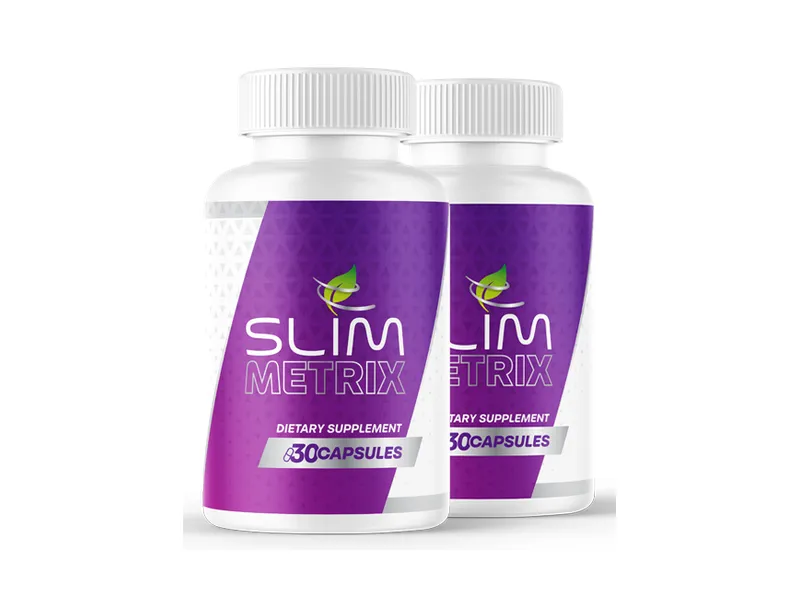
SlimMetrix Review: Ten Ingredients, Two Disclosed Doses, One Proprietary Blend (2026)
 By Theo Marchetti · Updated September 22, 2026
Key Takeaways
SlimMetrix is a once-daily capsule marketed for thermogenic fat burning, appetite control, and blood sugar balance. It names ten ingredients across its formula — chromium, zinc, green tea extract, berberine, and a six-component botanical blend — but discloses doses for only two (chromium at 50 mcg, zinc at 5.5 mg). The remaining eight ingredients, including the headline actives green tea and berberine, sit inside a 276 mg proprietary blend. With six ingredients sharing 276 mg, the average per-ingredient allocation is roughly 46 mg — far below clinical thresholds for any of them.
- Capsule format with a ten-ingredient thermogenic formula — SlimMetrix combines two disclosed minerals (chromium, zinc) with two undisclosed headline actives (green tea extract, berberine) and a six-ingredient botanical blend in a capsule rather than a gummy, theoretically allowing higher ingredient payloads per serving.
- Several ingredients have genuine published evidence behind them: berberine for glycemic control (umbrella meta-analysis, 2023), green tea extract for thermogenesis (dose-response meta-analysis, 2024), capsaicin for BMI reduction (meta-analysis, 2023), and alpha-lipoic acid for obesity risk (dose-response meta-analysis, 2020).
- A 276 mg proprietary blend cannot deliver six ingredients at clinical doses: the math is structural — resveratrol trials use 150–1,000 mg/day, alpha-lipoic acid 300–1,800 mg, milk thistle 140–420 mg silymarin, Korean ginseng 200–400 mg. Even if one ingredient consumed the entire 276 mg, it would reach clinical range for only cayenne. The disclosed chromium (50 mcg) is also 4–20× below the 200–1,000 mcg range used in glycemic studies.
- 60-day money-back guarantee with no subscription traps: pricing ranges from $49 to $207 per bottle depending on bundle size, with free shipping on the 6-bottle order.
The metabolism supplement market has matured past single-ingredient capsules. Buyers now expect formulas that target multiple metabolic pathways — thermogenesis, insulin signaling, appetite regulation, antioxidant support — in a single daily dose. SlimMetrix enters this space with a ten-ingredient capsule that checks nearly every trending category: berberine for AMPK activation, green tea extract for thermogenesis, cayenne for capsaicin-driven energy expenditure, chromium and banaba for insulin sensitivity, and alpha-lipoic acid for mitochondrial energy metabolism. On paper, the ingredient selection reads like a well-curated shortlist of the most-studied compounds in the weight management category. The problem is not what SlimMetrix contains — it is how much of each ingredient it delivers. With a 276 mg proprietary blend dividing six ingredients and no disclosed doses for green tea or berberine, the formula's actual therapeutic potential is a question the label does not answer.
What Is SlimMetrix, Mechanically?
SlimMetrix is a dietary supplement sold as thermogenic fat-burning capsules, with a recommended serving of one capsule per day. The supplement facts panel discloses two individually dosed ingredients — Chromium (as Chromium Picolinate) at 50 mcg and Zinc (as Zinc Gluconate) at 5.5 mg. Green Tea Extract (standardized to 50% EGCG, 80% Catechins) and Berberine (97%, from Berberis aristata) are listed separately but without individual doses. The remaining six ingredients are grouped into a 276 mg proprietary botanical blend: Resveratrol, Milk Thistle (80% Silymarin), Cayenne (40,000 HU), Korean Ginseng (8% ginsenosides), Banaba (2% Corosolic Acid), and Alpha Lipoic Acid. The product is described as manufactured in a GMP-certified facility and third-party tested. Orders are processed through BuyGoods. For a quick visual summary, see our SlimMetrix Overview.
Who SlimMetrix Is For
SlimMetrix targets adults seeking a convenient, one-capsule approach to metabolism support. The sales page frames the product as a 'science-driven companion' that combines 'clinically-studied' ingredients for fat burning, appetite control, blood sugar balance, and sustained energy — without the complexity of multi-capsule regimens or elaborate timing protocols.
The capsule format is a meaningful structural advantage over the gummies that dominate this cluster. Capsules can physically accommodate more active ingredient per serving than a gummy, which must allocate significant mass to pectin, sweeteners, and binders. But this advantage only materializes if the manufacturer actually fills that capsule capacity with clinical-level doses — and the proprietary blend model used here prevents that verification. This review evaluates what can be assessed: the quality and evidence behind each ingredient, the two disclosed doses, the structural implications of a 276 mg blend split six ways, and the overall value proposition for buyers.
SlimMetrix
Ten-ingredient thermogenic capsule — chromium 50 mcg, zinc 5.5 mg, plus green tea, berberine, and a 276 mg proprietary blend of six botanicals. One capsule daily.
$207 for 1 bottle, $158 for 2 bottles ($79/bottle), $207 for 3 bottles ($69/bottle, most popular), $294 for 6 bottles ($49/bottle, best value, free shipping). Prices confirmed from the official page in September 2026.
60-day money-back guarantee on all orders. No autoship or recurring charges. Contact support@quickslimstep.com for refunds. Physical containers must be returned to: 19655 E 35th Dr #100, Aurora, CO 80011, USA.
This offer is temporarily unavailable — showing our current alternative pick.Living With It
The daily routine is simple: one capsule per day with no timing restrictions specified. The capsule format avoids the taste fatigue and sugar content of gummy alternatives in this cluster. The vendor states that benefits 'build with daily use' and references a 4+ week timeline for noticeable results, consistent with the ingredient evidence base — berberine and green tea effects in clinical trials typically emerge over 8–12 weeks of consistent supplementation at adequate doses.
Because the proprietary blend does not disclose individual ingredient doses, stacking SlimMetrix with other supplements requires caution. If you already take a standalone berberine capsule (commonly dosed at 500 mg), a green tea extract (400–800 mg EGCG), or an alpha-lipoic acid supplement (600 mg), you have no way of knowing how much overlap exists. Similarly, the 50 mcg of chromium picolinate and 5.5 mg of zinc may stack with amounts already present in a daily multivitamin. If you take medications for blood sugar management, consult your physician before adding any supplement containing berberine, chromium, or banaba, as all three may interact with glucose-lowering drugs.
What Works in Its Favor
- Capsule format can physically hold more active compound than a gummy. Unlike the gummy-based metabolism supplements in this cluster, a capsule does not need to allocate mass to pectin, sweeteners, or flavorings — the full capsule volume is available for active ingredients, which structurally enables higher per-serving doses even though the actual amounts remain undisclosed.
- High-quality standardization on key botanical ingredients. Green Tea Extract is standardized to 50% EGCG and 80% Catechins, Berberine to 97% purity from Berberis aristata, Milk Thistle to 80% Silymarin, Korean Ginseng to 8% ginsenosides, and Banaba to 2% Corosolic Acid — these are specific, verifiable standardization markers that indicate a quality-conscious formulation, not generic whole-herb powder.
- Several ingredients have published meta-analyses supporting their use for metabolic endpoints. Berberine (2023 umbrella meta-analysis), green tea extract (2024 GRADE-assessed dose-response meta-analysis), capsaicin (2023 meta-analysis), and alpha-lipoic acid (2020 dose-response meta-analysis) each carry meaningful evidence for thermogenesis, glycemic control, or body composition.
- Multi-pathway formula design targeting thermogenesis, insulin signaling, and antioxidant defense simultaneously. Rather than betting on a single mechanism, the formula spans AMPK activation (berberine), catechol-O-methyltransferase inhibition (green tea EGCG), capsaicin-driven energy expenditure (cayenne), insulin receptor sensitization (chromium, banaba), and mitochondrial cofactor activity (alpha-lipoic acid).
- Competitive 6-bottle pricing at $49 per bottle with no subscription. The bulk tier brings the per-day cost to approximately $1.63. The absence of autoship billing and the 60-day refund policy are consumer-friendly safeguards in a category where recurring charges are common.
- GMP-certified manufacturing and third-party testing claimed. The vendor states US-based manufacturing with GMP certification and third-party testing — standard trust signals that, if accurate, indicate baseline quality control over raw materials and finished product.
Key Specs
- Serving size
- 1 capsule daily
- Disclosed minerals
- Chromium (as Chromium Picolinate) 50 mcg; Zinc (as Zinc Gluconate) 5.5 mg
- Undisclosed headline actives
- Green Tea Extract (50% EGCG, 80% Catechins); Berberine (97%, from Berberis aristata)
- Proprietary botanical blend
- 276 mg total — Resveratrol, Milk Thistle (80% Silymarin), Cayenne (40,000 HU), Korean Ginseng (8% ginsenosides), Banaba (2% Corosolic Acid), Alpha Lipoic Acid
- Manufacturing
- GMP-certified facility, third-party tested; orders via BuyGoods
- Guarantee
- 60-day money-back guarantee, non-subscription purchase
Performance
SlimMetrix presents a unique evaluation challenge: it discloses two ingredient doses that fall below clinical thresholds and hides the rest behind a proprietary blend. We assess each layer of the formula against the published evidence.
Chromium Picolinate — 50 mcg (disclosed). This is the most precisely evaluable ingredient. Clinical trials investigating chromium for glycemic outcomes have used 200–1,000 mcg daily. At 50 mcg, SlimMetrix delivers 4 to 20 times less than the studied range. For context, the FDA's Daily Value for chromium is 35 mcg; 50 mcg provides ~143% DV but remains well below the supplemental doses associated with metabolic effects in clinical research. Lipotrine — a gummy in this cluster — provides 25 mcg, so SlimMetrix does deliver double that amount, though both fall short of the clinical range.
Zinc Gluconate — 5.5 mg (disclosed). Zinc is an essential mineral involved in over 300 enzymatic reactions, including insulin signaling. At 5.5 mg (50% of the 11 mg DV), this is a modest nutritional dose — not a therapeutic one. The literature does not support zinc supplementation at this level as a primary driver of weight management outcomes. Its inclusion likely supports the formula's general metabolic function claims rather than delivering a standalone effect.
Green Tea Extract (50% EGCG, 80% Catechins) — dose not disclosed. A 2024 GRADE-assessed dose-response meta-analysis (Asbaghi et al., British Journal of Nutrition) across 59 RCTs with 3,802 participants found green tea extract reduced body weight and BMI, with effective doses in the range of 400–800 mg EGCG per day. The thermogenic mechanism — catechol-O-methyltransferase inhibition by EGCG — is dose-dependent. Without a disclosed dose, we cannot assess whether SlimMetrix delivers a meaningful amount.
Berberine (97%, from Berberis aristata) — dose not disclosed. A 2008 trial by Yin et al. established 1,500 mg/day as the benchmark for berberine's glycemic effects, with a 2023 umbrella meta-analysis confirming effects at 500–1,500 mg/day. The capsule format could theoretically accommodate several hundred milligrams of berberine — unlike a gummy — but with no disclosure, this remains speculation.
The 276 mg Proprietary Botanical Blend. This is where the formula's structural math becomes decisive. Six ingredients share 276 mg total, yielding an average of ~46 mg each. Here is how that compares to clinical doses:
• Resveratrol: a 2026 meta-analysis of 23 RCTs found no significant body weight reduction (WMD: −1.42 kg, p = 0.117). Clinical doses: 150–1,000 mg/day. At ~46 mg average: 3–22× below studied range.
• Milk Thistle (80% Silymarin): primarily studied for hepatoprotection, not weight loss. Clinical doses: 140–420 mg silymarin/day. At ~46 mg: 3–9× below.
• Cayenne (40,000 HU): 2023 meta-analysis found capsaicin reduces BMI. Clinical doses: 2–6 mg capsaicin/day. This is the one ingredient where a small amount may be meaningful — capsaicin is potent at low milligram doses.
• Korean Ginseng (8% ginsenosides): limited direct evidence for weight management. Clinical doses: 200–400 mg extract/day. At ~46 mg: 4–9× below.
• Banaba (2% Corosolic Acid): promising early evidence for glycemic control (2025 review). Clinical doses: 16–48 mg corosolic acid/day, requiring 800–2,400 mg of 2% extract. At ~46 mg extract: yields ~0.9 mg corosolic acid, 18–53× below.
• Alpha Lipoic Acid: a 2020 dose-response meta-analysis found ALA significantly reduces obesity risk. Clinical doses: 300–1,800 mg/day. At ~46 mg: 7–39× below.
The structural conclusion is clear: with the possible exception of cayenne, no ingredient in the proprietary blend can be present at a clinically meaningful dose. Proprietary blends exist because they allow manufacturers to list trending ingredients without committing to effective quantities of each one. SlimMetrix's use of this model with six ingredients inside 276 mg is a textbook example of the practice.
What the Sales Page Gets Right — and What It Doesn't
The ten named ingredients are all real compounds with published research — this is not a formula of obscure or fabricated ingredients. The vendor uses structure/function language ('supports healthy metabolism,' 'supports appetite control') and includes the required FDA disclaimer. Green tea, berberine, cayenne, and alpha-lipoic acid each have meta-analyses supporting their use at appropriate doses. The capsule format avoids the sugar and pectin constraints of gummy alternatives. The 60-day refund window and absence of autoship billing reduce financial risk. GMP certification and third-party testing are claimed.
The phrase 'clinically-studied ingredients' appears repeatedly on the sales page without linking or citing any specific study. While the ingredients are indeed studied, the proprietary blend model means the product may not deliver clinically studied amounts. The page features no named doctor or expert endorsement — a neutral absence rather than a red flag. Pricing displays inflated 'YOU SAVE' amounts against unsubstantiated original prices (e.g., a single bottle listed at $297 'reduced' to $207). A countdown timer ('Spring Sale — Ends in 02:00:00') resets on page reload — a manufactured urgency tactic. The vendor page does not explain what 'third-party tested' means or name the testing laboratory. The return policy requires shipping empty containers back to Colorado, and the vendor reserves the right to deny refunds for 'repeated abuse/fraud patterns' — standard but worth noting.
Verdict
SlimMetrix earns a recommendation for a specific buyer: someone who wants a capsule-based metabolism supplement with broad ingredient coverage, prefers capsules over gummies, and values the convenience of a single daily dose. The capsule format is a genuine structural advantage — it avoids the pectin, sweetener, and binding mass that limits gummy payloads, and the standardization markers on key ingredients (50% EGCG, 97% berberine purity, 80% silymarin, 8% ginsenosides) indicate a quality-conscious formulation at the raw material level.
What buyers need to weigh carefully is the proprietary blend and partial dose disclosure. The two disclosed ingredients — chromium at 50 mcg and zinc at 5.5 mg — are both below clinical research ranges. The six ingredients inside the 276 mg botanical blend are mathematically constrained to sub-clinical doses for five of the six components, with only cayenne potentially present at an effective amount. And the two headline actives — green tea extract and berberine — have no disclosed doses at all, despite being the ingredients most buyers are purchasing for.
If the capsule format and broad ingredient selection appeal to you and you are treating the 60-day guarantee as your evaluation window, the 6-bottle bundle at $49/bottle is the most cost-effective entry point ($1.63/day). Compare this against a standalone berberine capsule at a disclosed 500 mg dose ($0.30–$0.60/day) paired with a standalone green tea extract at 400 mg EGCG ($0.20–$0.40/day) — the a-la-carte approach delivers verified doses of the two most evidence-backed ingredients for roughly half the cost per day. For reviews of other metabolism-support formulas in this cluster — including Lipotrine (fully transparent doses) and LipoBliss (proprietary blend) — see our Metabolism Support cluster page.
This review reflects our independent editorial analysis of the manufacturer's published label and the peer-reviewed literature — see our Editorial Policy and How We Evaluate. You can also view our SlimMetrix Overview for a fast product snapshot. NutrasInsights may earn a commission from qualifying purchases; see our Affiliate Disclosure.
Frequently Asked Questions
What ingredients does SlimMetrix contain?
SlimMetrix contains ten ingredients across three tiers: (1) two disclosed minerals — Chromium (as Chromium Picolinate) at 50 mcg and Zinc (as Zinc Gluconate) at 5.5 mg; (2) two headline actives with undisclosed doses — Green Tea Extract (50% EGCG, 80% Catechins) and Berberine (97%, from Berberis aristata); and (3) a 276 mg proprietary botanical blend containing Resveratrol, Milk Thistle (80% Silymarin), Cayenne (40,000 HU), Korean Ginseng (8% ginsenosides), Banaba (2% Corosolic Acid), and Alpha Lipoic Acid. No individual doses are disclosed for the blend ingredients.
Is 50 mcg of chromium picolinate an effective dose?
Clinical trials investigating chromium picolinate for glycemic improvement have used 200–1,000 mcg daily. At 50 mcg, SlimMetrix provides approximately 143% of the FDA Daily Value but is 4 to 20 times below the supplemental range studied for metabolic effects. For comparison, Lipotrine provides 25 mcg — half the SlimMetrix dose — though both fall short of clinical research thresholds.
How does SlimMetrix compare to Lipotrine and LipoBliss?
All three are metabolism-support supplements sold through similar channels. Lipotrine is a gummy with three fully transparent ingredients (Berberine HCl 40 mg, Cinnamon Bark Extract 28 mg, Chromium Picolinate 25 mcg) — all well below clinical doses. LipoBliss is a capsule with a proprietary blend (200 mg total, doses undisclosed). SlimMetrix is a capsule with ten ingredients, two disclosed doses (chromium 50 mcg, zinc 5.5 mg), and a 276 mg proprietary blend. Lipotrine's advantage is full transparency; SlimMetrix's advantage is broader ingredient coverage and capsule format; LipoBliss sits between the two. See our full cluster reviews for detailed comparisons.
Is SlimMetrix safe to take with blood sugar medications?
No — not without physician guidance. SlimMetrix contains at least three ingredients that may interact with glucose-lowering medications: berberine (inhibits CYP2D6, CYP2C9, CYP3A4 and may lower blood glucose), chromium picolinate (may enhance insulin sensitivity), and banaba leaf extract (contains corosolic acid, which has demonstrated hypoglycemic effects in preliminary studies). The combined undisclosed doses make interaction risk assessment impossible. Consult your physician before adding SlimMetrix to any prescription regimen.
Ready to try SlimMetrix?
See current pricing, bundle deals, and availability on the official page.
Theo is a staff editor at NutrasInsights focused on Weight Management. He researches ingredient evidence and compares label doses against the studies vendors cite before any product earns a recommendation.