Men’s Vitality Formulas Buying Guide (2026): Adaptogens, Hormonal Support, and the Proprietary Blend Reality
Updated October 19, 2026 · By Owen Fitzgerald
At a Glance
Men’s vitality supplements promise hormonal support, sustained energy, and improved stamina through botanical blends of adaptogens and testosterone-adjacent herbs. The six most-researched ingredients in this category are Tongkat Ali (200–400 mg/day standardized extract), Ashwagandha (300 mg twice daily), Fenugreek/Testofen (600 mg/day), Tribulus Terrestris (400–750 mg/day), Maca (1,500–3,000 mg/day), and Saw Palmetto (320 mg/day liposterolic extract). The critical buyer question is always the same: does the formula deliver these compounds at their clinically studied doses, or does a proprietary blend hide what you are actually ingesting? In the product we have reviewed in this cluster so far, the proprietary blend structure prevented dose verification—a transparency gap buyers must understand before spending.
1. Why the Men’s Vitality Market Demands Informed Skepticism
Age-related hormonal decline is a biological reality that affects virtually every man. Testosterone production begins a gradual decrease of roughly 1–2% per year after age 30, and by the time men reach their late 40s and 50s, the cumulative effect can manifest as reduced energy, diminished stamina, slower recovery after exercise, lower mood, and changes in body composition. This is not a disease—it is normal physiology. But the emotional weight of these changes has created one of the most aggressively marketed supplement categories in existence.
The legitimate end of this market assembles clinically researched botanicals—adaptogens, hormone-modulating extracts, and antioxidant cofactors—at doses that match what was used in peer-reviewed trials. The opportunistic end packs marketing-friendly ingredient names into undisclosed proprietary blends, invents pseudoscientific mechanisms, and leans on emotional urgency (“reclaim your manhood”) to drive impulse purchases.
Before spending money on any men’s vitality formula, internalize the biological framework: dietary supplements cannot treat hypogonadism, cure erectile dysfunction, or replace testosterone replacement therapy (TRT) prescribed by an endocrinologist. What well-formulated supplements can do is provide adaptogenic, antioxidant, and nutritional support for healthy hormonal function, stress resilience, and cellular energy—but only when active compounds are present at clinically validated concentrations. The gap between “ingredient on the label” and “ingredient at an effective dose” is where most buyers lose their money.
2. The Key Ingredients: What Clinical Trials Actually Show
When evaluating a men’s vitality supplement, disregard the sales copy and focus exclusively on what peer-reviewed human clinical trials have demonstrated. Here are the core botanicals with genuine evidence, along with the daily dosage thresholds required to match published outcomes:
Tongkat Ali (Eurycoma longifolia): The Strongest Testosterone Signal
Tongkat Ali has the most compelling meta-analytic evidence for testosterone support in the men’s vitality botanical category. A 2022 systematic review and meta-analysis of nine studies (five RCTs) found a statistically significant increase in total testosterone levels in men receiving Eurycoma longifolia supplementation (SMD = 1.352, 95% CI 0.565–2.138, p = 0.001), with the effect confirmed in the hypogonadism subgroup.
A 6-month, double-blind, placebo-controlled RCT found that Tongkat Ali combined with concurrent training improved erectile function and increased total testosterone levels in men with androgen deficiency of aging males (ADAM). The clinical dose in most positive trials ranges from 200 to 400 mg per day of standardized root extract (typically standardized to eurycomanone content).
When a product lists “Tongkat Ali extract” without specifying the standardization method or the extract ratio, the clinical equivalence is unverifiable. A 100:1 extract and a 10:1 extract deliver very different eurycomanone payloads per milligram.
Ashwagandha (Withania somnifera): The Adaptogenic Anchor
Ashwagandha is the most broadly studied adaptogen in the vitality space, with evidence spanning testosterone, cortisol reduction, strength, and cognitive function. A 16-week, randomized, double-blind, placebo-controlled, crossover study in aging, overweight males found ashwagandha intake was associated with an 18% greater increase in DHEA-S (p = .005) and a 14.7% greater increase in testosterone (p = .010) compared to placebo.
In a separate 8-week randomized trial, 57 young males received 300 mg of ashwagandha root extract (KSM-66) twice daily and showed a significantly greater increase in testosterone (96.2 ng/dL vs. 18.0 ng/dL in placebo, p = 0.004), along with improved muscle strength and recovery. The effective dose is 300 mg twice daily (600 mg total) of a standardized root extract such as KSM-66 or Sensoril.
Ashwagandha also significantly reduces cortisol—the stress hormone that suppresses testosterone when chronically elevated. This dual mechanism (supporting testosterone while reducing cortisol) makes it one of the most evidence-grounded ingredients in the category, but it also demands a substantial dose that many proprietary blends cannot accommodate.
Fenugreek (Testofen / Trigonella foenum-graecum): Consistent Testosterone Signal
Fenugreek extract has some of the most consistent clinical data in this category. A meta-analysis of four clinical trials found that fenugreek extract supplement has a significant effect on total serum testosterone levels in males.
Specifically, a double-blind, randomized clinical study with 120 healthy men aged 43–70 receiving Testofen (a specialized fenugreek seed extract) at 600 mg/day for 12 weeks found that both total serum testosterone and free testosterone increased compared to placebo, with concurrent improvements in sexual function including number of morning erections and frequency of sexual activity.
The clinical dose is 600 mg/day of standardized fenugreek seed extract. This represents a meaningful capsule payload—in a two-capsule formula already containing Tongkat Ali and Ashwagandha, the arithmetic starts to strain.
Tribulus Terrestris: Promising for Function, Weak for Testosterone
Tribulus is one of the most commonly marketed “testosterone boosters,” but the clinical evidence tells a more nuanced story. A 2025 systematic review of 10 studies (483 participants) found that eight out of ten studies did not report significant changes in androgen profile following Tribulus supplementation, with only two studies showing small intra-group testosterone increases (60–70 ng/dL) of low clinical magnitude.
However, the evidence for sexual function is more encouraging: Tribulus supplementation at 400 to 750 mg/day for 1–3 months improved erectile function in 3 of 5 studies that assessed this parameter, and a meta-analysis of randomized trials found that IIEF scores were markedly elevated compared to pre-supplementation levels.
The takeaway: Tribulus may offer modest functional benefits for sexual health, but its reputation as a “testosterone booster” is not well-supported by the weight of evidence. Vendors who market Tribulus primarily as a testosterone-raising compound are overstating what the trials show.
Maca (Lepidium meyenii): Desire Without Hormonal Change
Maca is a Peruvian root that occupies a unique position in this category. A systematic review of four RCTs found limited evidence suggesting maca may improve sexual desire in healthy men and improve erectile function in patients with mild ED.
Crucially, a clinical trial measuring serum reproductive hormone levels found that maca had no effect on testosterone, estradiol, LH, or FSH. This means maca’s mechanism of action for perceived vitality benefits appears to operate independently of the hormonal axis—possibly through central nervous system pathways rather than endocrine modulation.
The typical study dose is 1,500 to 3,000 mg/day of gelatinized maca root powder. This is a very large payload—3,000 mg alone would exceed the total capacity of two standard capsules. Any proprietary blend claiming to include maca alongside five other ingredients at a total weight under 1,000 mg is delivering a token amount.
Saw Palmetto (Serenoa repens): DHT and Prostate Crossover
Saw Palmetto appears in many vitality formulas not for testosterone boosting but for its 5-alpha-reductase inhibition activity, which modulates the conversion of testosterone to dihydrotestosterone (DHT). The standard clinical dose is 320 mg/day of standardized liposterolic extract, well-documented in prostate-support literature. In the vitality context, saw palmetto plays a supporting role: by managing DHT metabolism, it theoretically helps preserve free testosterone levels. For a deeper analysis of saw palmetto’s prostate evidence, see our Prostate Support Buying Guide.
Supporting Compounds: Zinc, Vitamin D, and Green Tea Extract
Several micronutrient and antioxidant cofactors appear across vitality formulas:
- Zinc — essential cofactor for testosterone synthesis. Zinc deficiency directly suppresses testosterone production. Supplemental doses of 15–30 mg/day (as zinc picolinate or citrate, not zinc oxide) are supported for men with suboptimal dietary intake.
- Vitamin D — classified as a prohormone, with evidence linking deficiency to lower testosterone levels in men. Supplemental doses of 2,000–5,000 IU/day are common, though benefits are most pronounced in men who are deficient at baseline.
- Green tea extract / EGCG — antioxidant and mild aromatase modulator. Provides cellular defense against oxidative stress but is not a primary testosterone driver.
- Vitamin C — antioxidant support that may protect testosterone-producing Leydig cells from oxidative damage.
These cofactors are legitimate but complementary—none of them drives the primary hormonal or adaptogenic effect. When a formula leads its marketing with zinc and vitamin C but buries the botanical doses inside a proprietary blend, the micronutrients may be functioning as window dressing for an underdosed core.
3. The Proprietary Blend Trap: Capsule Math vs Clinical Reality
The most pervasive issue in men’s vitality supplements—identical to the prostate category—is the use of proprietary blends that prevent dose verification. Here is the arithmetic that should inform every purchase decision:
- A standard size-00 capsule holds approximately 600 to 750 mg of active powdered material.
- A two-capsule daily serving delivers a maximum total payload of roughly 1,200 to 1,500 mg.
- To simultaneously deliver clinical doses of Tongkat Ali (300 mg), Ashwagandha KSM-66 (600 mg), Fenugreek/Testofen (600 mg), and Tribulus (500 mg), the required payload exceeds 2,000 mg—before adding Saw Palmetto, zinc, or any antioxidant cofactors.
When a manufacturer packs six to ten botanicals into a proprietary blend totaling 800 mg or less, it is mathematically impossible for more than one or two ingredients to reach their studied effective dose. The vendor can legally highlight Tongkat Ali and Ashwagandha on the front label, but inside the capsule, each may be present at a fraction of its clinical threshold.
What Our Reviewed Product Reveals
In the men’s vitality product we have reviewed to date, a familiar pattern emerges:
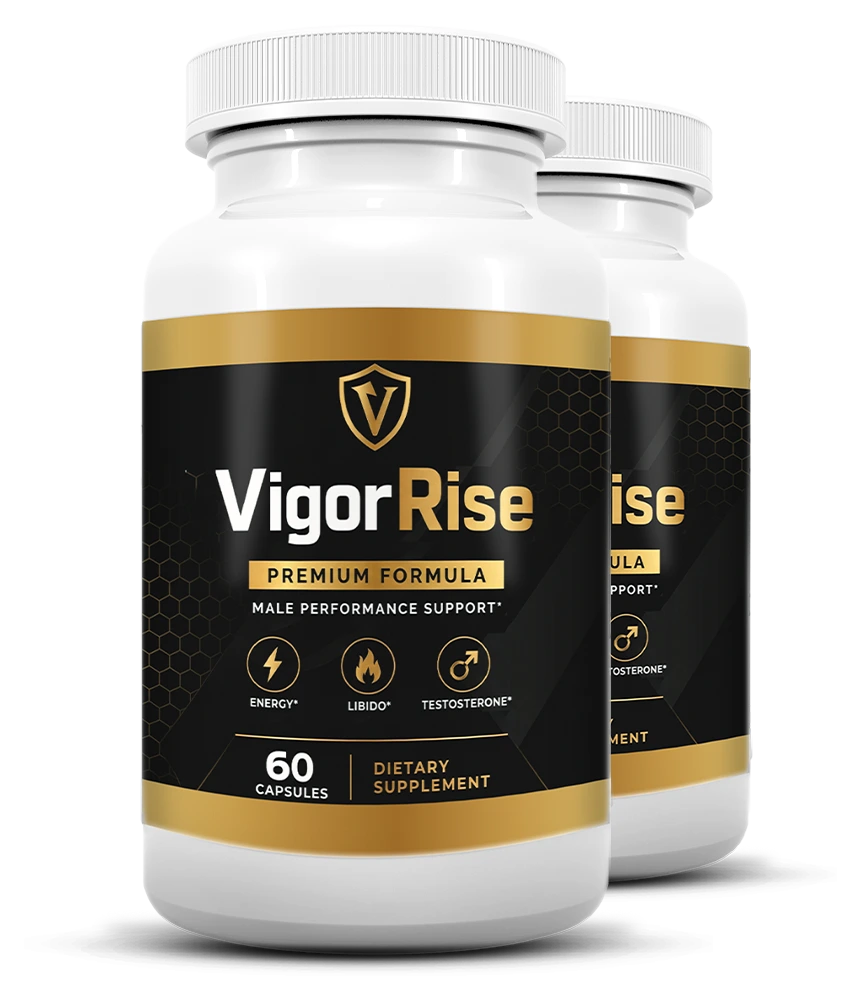
- VigorRise: A dual-capsule softgel formula blending Tongkat Ali, Tribulus Terrestris, Saw Palmetto, green tea extract, and vitamin C. The formula uses a proprietary blend that does not disclose individual milligram amounts. As our review noted, “the proprietary blend does not disclose exact milligram amounts, but the individual ingredient doses fall short of the highest clinical levels.” Priced at $69/bottle ($49 on the 6-bottle bundle) with a 60-day money-back guarantee. Read our full review →
This is not a flaw unique to VigorRise—it is the structural norm in the men’s vitality supplement market. Transparent labeling with individually disclosed doses remains the exception, not the rule. When evaluating any product in this category, the first question is always: can I verify the dose of each active ingredient?
4. The “Testosterone Booster” Claim Spectrum: From Plausible to Fraudulent
Not all testosterone-related marketing claims carry equal weight. Understanding the spectrum helps separate legitimate products from bad-faith marketing:
- Plausible (evidence-aligned): “Supports healthy testosterone levels,” “adaptogenic support for hormonal balance,” “supports energy and vitality.” These structure/function claims align with what the published research actually shows—modest, supportive effects in the context of healthy physiology.
- Overstated (cherry-picked): “Clinically proven to boost testosterone by 300%,” “doubles free testosterone in 2 weeks.” These typically cherry-pick a single data point from one small study, ignore contradicting evidence, and extrapolate far beyond what the overall literature supports.
- Fraudulent (no basis): “Natural alternative to TRT,” “cures low testosterone,” “reverses andropause.” No dietary supplement can treat diagnosed hypogonadism or replace prescribed testosterone replacement therapy. These claims violate FDA structure/function guidelines and should disqualify the vendor immediately.
A reliable vendor positions their product within the first category, cites specific PubMed-indexed studies for each ingredient claim, and acknowledges the limitations of botanical supplementation relative to medical intervention.
5. Red Flags: What to Skip Immediately
When evaluating men’s vitality supplement sales pages, these warning signs should prompt you to close the tab:
1. Claims of Treating Low Testosterone, Erectile Dysfunction, or Infertility
Under federal regulations, dietary supplements can only make structure/function claims. Any vendor claiming their product “treats low T,” “cures ED,” or “reverses male infertility” is operating outside FDA guidelines and should be avoided. These are medical conditions requiring physician evaluation.
2. Fabricated Hormonal Mechanisms
Some sales pages claim that modern environmental factors have “shut down” your testosterone production and that their specific formula “reactivates” dormant pathways. While environmental endocrine disruptors are a real research topic, the idea that a capsule supplement can override these systemic effects has no clinical trial support. A vendor who invents a dramatic narrative to explain why only their product works is not operating in good faith.
3. Before-and-After Physique Transformations
Photographs showing dramatic muscle gain or fat loss attributed to a vitality supplement are misleading. The botanical evidence supports modest hormonal modulation—not the kind of body-composition changes that would require pharmacological intervention, structured resistance training, and caloric manipulation over months. If the sales page looks like a steroid advertisement, the claims exceed what any botanical supplement can deliver.
4. No Clinical Studies Cited for Their Specific Ingredients
A legitimate formulator who has used clinically studied ingredients at proper doses is eager to cite the research. When a sales page names zero PubMed references, identifies no formulator, and provides no third-party testing documentation, assume the formula is marketing-first and evidence-last.
5. Hidden Auto-Ship or Aggressive Upselling
Some vendors offer a discounted “trial” that buries an automatic monthly subscription in the checkout terms. Always verify that your purchase is a one-time payment with no hidden autoship enrollment, and confirm whether the money-back guarantee applies to opened bottles—you cannot evaluate a supplement without actually taking it.
6. The Buyer’s Decision Framework
Use this five-step checklist before placing an order for any men’s vitality supplement:
- Check for label transparency: Does the Supplement Facts panel disclose every individual ingredient dose? A proprietary blend total shared across six or more botanicals is a red flag for underdosing.
- Verify dosage alignment: At minimum, look for at least one core botanical—Tongkat Ali at 200–400 mg (standardized extract), Ashwagandha at 300–600 mg (KSM-66 or equivalent), or Fenugreek at 600 mg—at or near the dose used in published clinical trials.
- Assess the claim spectrum: Does the marketing use structure/function language (“supports healthy testosterone levels”) or disease/treatment language (“cures low T”)? The former is legally and scientifically appropriate; the latter is a disqualifying signal.
- Confirm manufacturing standards: Look for GMP-certified facility, third-party testing for purity and heavy metals, and a clear batch number and expiration date on the label.
- Ensure adequate buyer protection: A 60-day or longer money-back guarantee that covers opened bottles, with no auto-ship enrollment. Clinical trials on these botanicals run 8 to 16 weeks—you need enough guarantee runway to evaluate with consistent daily use.
Our Reviewed Product in This Cluster
Based on our hands-on review in the Men’s Vitality Formulas cluster:
- Plant-centric adaptogenic blend with antioxidant cofactors: VigorRise assembles Tongkat Ali, Tribulus Terrestris, Saw Palmetto, green tea extract, and vitamin C in a GMP-certified softgel format, targeting energy, mood, and hormonal balance through a multi-pathway approach. Tiered bundle pricing starts at $69/bottle (down to $49 on the 6-bottle bundle) with a 60-day money-back guarantee (Check VigorRise Price →).
As we review additional products in this cluster, this guide will be updated to reflect the comparative landscape, including dosing transparency, ingredient overlap, and value analysis across formulas.
For a broader look at men’s health categories including prostate support, see our Prostate Support Buying Guide or browse the Energy & Vitality Department.
Frequently Asked Questions
What is the most important ingredient to look for in a men’s vitality supplement?
Tongkat Ali (Eurycoma longifolia) currently has the strongest meta-analytic evidence for supporting testosterone levels, with a 2022 systematic review of nine studies finding a statistically significant increase (p = 0.001). Look for at least 200–400 mg of standardized root extract per daily serving. If the label lists a proprietary blend total rather than individual doses, you cannot verify whether Tongkat Ali reaches this threshold.
Can a vitality supplement replace testosterone replacement therapy (TRT)?
No. Botanical supplements provide nutritional and adaptogenic support for healthy hormonal function within the normal physiological range. They cannot treat diagnosed hypogonadism, which is a medical condition requiring endocrinologist evaluation. If your blood work shows clinically low testosterone (generally below 300 ng/dL), a supplement is not a substitute for medical care.
Does Tribulus Terrestris actually boost testosterone?
The weight of evidence says no for most men. A 2025 systematic review found that 8 out of 10 studies showed no significant change in androgen profile after Tribulus supplementation. However, Tribulus may offer modest benefits for sexual function and erectile quality at doses of 400–750 mg/day. Its reputation as a “testosterone booster” exceeds what the clinical data supports.
How long should I take a vitality supplement before expecting to notice changes?
Clinical trials on the key botanicals in this category typically measure outcomes at 8 to 16 weeks. Ashwagandha studies often show hormonal changes at 8 weeks, Tongkat Ali at 4–12 weeks, and fenugreek at 12 weeks. A reasonable evaluation period is at least 60–90 days of consistent daily use—which is why selecting a product with a guarantee window of at least 60 days is important for risk-free assessment.
Why do men’s vitality supplements use proprietary blends instead of disclosing doses?
Proprietary blends allow manufacturers to list clinically studied ingredient names on their label and marketing while potentially including only small, inexpensive amounts of each. This reduces manufacturing costs while making it impossible for consumers to verify whether any individual ingredient reaches its studied effective dose. When a manufacturer has nothing to hide regarding dosages, they list them openly on the Supplement Facts panel.
Is it safe to combine Tongkat Ali with Ashwagandha or Tribulus?
The combination of these botanicals has been used in commercial formulas without reported adverse interactions in clinical settings. However, all three may interact with hormonal medications, including testosterone therapy, 5-alpha-reductase inhibitors, and certain antidepressants. If you take prescription medications—particularly for hormonal conditions, blood pressure, or mental health—consult your healthcare provider before starting any combination botanical supplement.

Owen Fitzgerald is a staff editor at NutrasInsights focused on Energy & Vitality and botanical supplements. He checks label doses against published research before any product earns a recommendation.